
Delhi's 16-Year-Old Aaryan Sharma Smashes 311* in 20 Overs: Inside the 30-Six School Cricket Triple Century and What the Numbers Really Say
**संक्षिप्त उत्तर कैप्सूल** **क्या हुआ?** दिल्ली के सुमेरमल जैन स्कूल के 16 वर्षीय कप्तान आर्यन शर्मा ने 20 ओवर के स्कूली नॉकआउट मुकाबले में 93 गेंदों पर नाबाद 311 रन बनाए — 27 चौके, 30 छक्के, स्ट्राइक रेट 334.4। उनकी टीम ने दो विकेट पर 389 रन बनाए। **यह कब और कहां?** दिल्ली में खेली गई एक स्कूल टी20 प्रतियोगिता (रिपोर्ट में 'स्कूल्स टोटल टी20 लीग', ट्वीट में 'दिल्ली स्कूल्स टी20 लीग' कहा गया) के नॉकआउट चरण में। रिपोर्टिंग 26 अक्टूबर को हुई। **क्या यह कोई आधिकारिक रिकॉर्ड है?** नहीं। यह बीसीसीआई मान्यता प्राप्त आयु-वर्ग प्रतियोगिता नहीं है, और किसी शासी निकाय ने इस रिकॉर्ड की पुष्टि नहीं की है। स्कोरकार्ड का स्रोत ग्रासरूट्स प्लेटफॉर्म क्रिकहीरोज़ है। **आंकड़े सही हैं?** गणित सुसंगत है — 27 चौके (108) + 30 छक्के (180) = 288 रन सीमा रेखा से; शेष 23 रन 36 गैर-सीमा गेंदों से। कुल स्कोर का हिसाब भी मेल खाता है, जो ढीली गेंदबाजी (वाइड/नो-बॉल) की ओर संकेत करता है। **इस पारी का असली संदर्भ क्या है?** उसी नॉकआउट चरण में एक अन्य मुकाबले में 278* (तन्मय चौधरी) और 413/0 का टीम स्कोर बना, जबकि एक अन्य टीम 6.2 ओवर में 21 पर ढेर हुई। इससे स्पष्ट है कि परिस्थितियां और विरोधी स्तर असाधारण रूप से कमजोर थे। **आर्यन का उच्च-स्तरीय प्रदर्शन क्या है?** विनू मांकड़ ट्रॉफी (बीसीसीआई अंडर-19 एकदिवसीय) में तीन पारियों में 124 रन, सर्वोच्च 77*, मध्यक्रम में। यह ठोस लेकिन साधारण है। **तकनीकी चिंता क्या है?** रनों का 92.6% सीमा रेखा से आया; गैर-सीमा गेंदों पर रन गति केवल 0.64 प्रति गेंद — यानी स्ट्राइक रोटेशन का कोई सबूत नहीं। **क्या इसे भविष्य के सितारे का संकेत माना जाए?** नहीं। यह एक असाधारण घटना है, प्रतिभा का मापन नहीं। आकलन का आधार विनू मांकड़ और कूच बिहार का प्रदर्शन होना चाहिए, और कम से कम 10 प्रतिनिधि पारियों के बाद ही राय बननी चाहिए। **मुख्य जोखिम क्या हैं?** स्तर-स्थानांतरण विफलता, तकनीकी संकीर्णता, एक-पारी का नमूना, कार्यभार/चोट, हाइप मुद्रास्फीति, और स्कोरकार्ड/पात्रता सत्यापन। समग्र जोखिम रेटिंग: मध्यम। **अगर आगे क्या देखें?** अगले सीजन विनू मांकड़/कूच बिहार में 45+ औसत पर 300+ रन, दिल्ली अंडर-23 या रणजी संभावितों में प्रवेश, बल्लेबाजी क्रम की स्थिरता, गैर-सीमा गेंदों पर रन गति में सुधार, और इस टूर्नामेंट के मैदान का आकार। **अस्वीकरण:** यह जानकारी केवल खेल-संदर्भ के लिए है, सट्टेबाजी सलाह नहीं। कई आंकड़े सत्यापन-लंबित हैं।
New Delhi. Aaryan Sharma, the 16-year-old captain of Sumermal Jain School in Delhi, struck an unbeaten 311 off 93 balls in a 20-over school knockout fixture. His innings contained 27 fours and 30 sixes — 288 runs in boundaries alone. His strike rate was 334.4, a figure that simply does not exist inside any professional cricketing frame of reference. His team finished on 389 for 2 in their allotted 20 overs, at roughly 19.45 runs per over.
The innings went viral almost immediately. Wisden, the British cricket publication, ran a report framing it as an 'ultra rare' 20-over triple hundred. On social media, a fan cricket account shared an image of the scorecard, credited to the grassroots scoring platform CricHeroes. The tweet, dated 26 October, and the coverage built on it pushed the innings to the centre of Indian cricket conversation.
But one foundational fact must be stated before anything else, because it governs every conclusion that follows: this is a school-level knockout fixture, not a BCCI-recognised age-group competition. It is not an ICC event, not a professional league, and no franchise or auction is involved. Read the 311* with that sentence in mind and its meaning changes — it is an extraordinary event, but it is not a measurement of a player's ability.
Match shape: no brake anywhere
Scoring in this match was essentially uninterrupted from start to finish. For the first wicket, Aaryan and Rijak Kohli added 219 in 12.3 overs. Rijak's contribution was 43 off 25 — meaning 176 of those 219 opening-stand runs came from Aaryan alone. The third wicket then added 166 in the final seven overs, with Sahib Singh contributing 2. In other words, Aaryan faced almost every ball of that partnership.
At professional T20 level, scoring rate moves through three phases: the powerplay (overs 1-6), the middle overs (7-15) and the death (16-20). In the middle overs, bowling tightens, fields spread, spin is introduced and the rate falls. None of that happened here. There was no meaningful drop in scoring rate from start to finish. Technically this is phase-invariant scoring, and that is itself the diagnostic: there was no bowling or fielding on the other side capable of putting a brake on him. There was no tactical contest at all.
Pitch, ground and boundary: the biggest missing variable
The largest gap in any analysis of this innings is that the pitch type, ground dimensions, boundary distance, and whether the match was played on a full-size ground are all unreported. For a 30-six innings, boundary dimensions are the single most important variable — and they are absent. Weather, dew, day/night status and any Duckworth-Lewis involvement are equally unreported. Any inference about conditions therefore rests on low confidence.
Opposition quality: the clearest structural signal
There is no direct information on the quality of the bowling. But there is a structural proxy, and it is stark. In the knockout stage of the same tournament, another side was bowled out for 21 in 6.2 overs. That single fact draws the full picture of this competition's bowling and fielding standards — extremely low, and highly dispersed between teams.
In another fixture in the same knockout stage, Tanmay Chaudhary made 278 off 77 and Shivesh Kapoor 102 off 47, with the team reaching 413 for none in 20 overs. That match was won by 392 runs. So within roughly 24 hours of Aaryan's innings, the same competition produced an even larger team total. That is the spine of this whole debate: when 278, 311 and 413/0 all appear in the same stage of the same tournament, the conclusion is that conditions were extraordinary — not that two generational talents happened to be born at once.
The arithmetic reinforces it. In the 413/0 innings, Tanmay faced 77 balls and Shivesh 47 — 124 balls in total. But an innings contains at most 120 legal deliveries. That means at least four wides or no-balls. Extras were therefore material in this competition, which is to say bowling discipline was loose.
The arithmetic of Aaryan's innings: the scorecard looks authentic
One piece of good news: the numbers reconcile, which confirms this is not a garbled or fabricated viral figure. 27 fours is 108 runs and 30 sixes is 180 — 288 runs in boundaries. Subtract 288 from 311 and 23 remain, scored off the 36 non-boundary balls among his 93. That is roughly 0.64 runs per ball. The arithmetic is fully consistent.
Add up the team total: 311 (Aaryan) + 43 (Rijak) + 2 (Sahib) = 356. That leaves 33 runs out of 389, attributable to the dismissed batter and extras — again pointing to loose bowling in the form of wides and no-balls.
Technical read: 92.6% boundary dependence
Boundary runs account for 92.6% of Aaryan's 311. Among elite T20 batters the equivalent figure is typically 55-70%. That means there is almost no evidence of strike rotation in the innings. Of his 93 balls, 57 were hit to the boundary — 61.3% of deliveries faced. Against a weak attack that signals near-total dominance, but it also raises the question of what happens when boundaries are not available.
That is where the most important technical question sits. On non-boundary balls his scoring rate was about 0.64 runs per ball. At professional T20 level the equivalent is typically 0.9 to 1.1. So when he was not hitting fours and sixes, he did not visibly manipulate the field, rotate strike, turn ones into twos or bat under pressure. At higher levels boundary frequency halves or worse — and then that gap becomes the binding constraint. This conclusion should be logged at medium confidence, since it rests on a single innings.
The second most valuable data point: the Vinoo Mankad Trophy record
The most analytically valuable data pair in this whole story must be read together — 311 at school level versus 124 runs in three innings, best 77, in the Vinoo Mankad Trophy. The Vinoo Mankad Trophy is the BCCI's national under-19 one-day competition, the recognised level immediately above school cricket. Aaryan bats in the middle order there, while he opens at school level.
This pair is a textbook illustration of the level-transfer problem. 124 runs in three innings is solid but unremarkable — the normal profile of a competent age-group batter, not a prodigy. Every conclusion in this article should therefore be anchored to this pair. The school 311* and the Vinoo Mankad numbers must never be blended into a single 'form' narrative; they are data from different levels and they describe what look like different players.
Batting-position instability: a development risk
Opening at school level and batting in the middle order in the representative tournament usually reflects one of two things: team need, or a technical assessment of his game against the new ball. Role ambiguity at 16 can slow technical specialisation, though it also builds flexibility. It should be logged as a development risk at medium confidence.
The Mohit Ahlawat precedent: cited, but incompletely
Wisden's report links the feat to Mohit Ahlawat's February 2026 innings of 300 in a Delhi local T20 match, describing the achievement as repeated 'nine years' later. Arithmetically the framing holds (February 2026 to 2026), which raises confidence that the event is genuinely recent rather than a recycled item.
But the report used the precedent purely as a rarity marker, not as a career-outcome warning. Analytically, Ahlawat's innings did not convert into an established international career nine years on — the conversion rate for such innings to the top level is low. That information is pending verification, so it should be held at medium confidence, but the direction is clear: the precedent is a caution, not an encouragement.
The Delhi pathway: talent density and selection politics
'Team' here does not mean ICC rankings or World Test Championship standings — that framework does not apply to this information. The applicable framework is the Indian domestic pathway: school cricket → BCCI age-group (Vinoo Mankad Trophy, Cooch Behar Trophy) → Delhi Ranji Trophy contention → IPL auction eligibility.
Aaryan is currently part of the Delhi under-19 squad and has played the Vinoo Mankad Trophy. At 16 he is at the front end of the under-19 window, with two to three years of age-group eligibility remaining — favourable timing for a development runway.
But a nuance matters here. Delhi's identity has been as a factory for batters who reach the international level. That means intra-state competition for pathway slots is unusually intense. A school-level record does not differentiate him within that pool; sustained Vinoo Mankad and Cooch Behar output would.
One further factor in the same cohort will shape media attention asymmetrically — the presence of Aaryavir Sehwag, son of Virender Sehwag, in the same Vinoo Mankad group. This is unrelated to merit but will affect coverage balance and how Aaryan's achievements are framed.
On selection impact, the near-term effect should be read as close to nil. BCCI age-group selection is weighted to sanctioned tournaments, not school leagues. A school triple century is a media event, not a selection input.
The grassroots data ecosystem: the real protagonist
The most important structural development in this story is not Aaryan but the data platform. The scorecard image is credited to CricHeroes, a ball-by-ball grassroots scoring and analytics app used widely across Indian school, club and local league cricket. That means the innings is verifiable through a digital, ball-by-ball record — the mechanism by which Indian grassroots cricket has become scoutable at scale.
There is a subtle conflict of interest inside that. The same platform that supplies the scorecard also supplies the highlight clip and the promotional amplification — the verification layer and the marketing layer sit in one institution. This should be logged at medium confidence.
How the Wisden report was built: aggregation, not reporting
Look at the sourcing hierarchy and the picture is clear. The most detailed figures — the 334 strike rate, the boundary split, the 27 fours and 30 sixes — come from a fan account's tweet. The historical comparison cites a 2026 tweet rather than a primary record. And no organiser, coach, selector or school official is quoted anywhere. This is aggregation, not reporting — two embedded tweets and one image credit.
The report's closing paragraph also reveals the publisher's business model: a follow call-to-action plus a list of services including live scores, stats, quizzes and match odds. That is a volume-driven content model in which a school triple century is a low-cost, high-engagement item. It also explains the absence of any primary interview or scorecard analysis.
A naming inconsistency: small signal, real meaning
The report calls the competition the 'Schools Total T20 League' while the quoted tweet calls it the 'Delhi Schools T20 League'. Minor, but it signals that the report was assembled from secondary material rather than an official fixture list.
Governance and verification: not a rules breach, a recognition gap
There is no rule violation here. A total of 389/2 in 20 overs is entirely lawful. There is no spot-fixing or betting signal, and school cricket sits far outside betting-market liquidity — so integrity risk is low. The real issue is that no central body maintains authoritative records for school cricket. 'Ultra rare' and 'record' framing is therefore journalistic, resting on the accuracy of a third-party scoring app and social amplification.
Verification levels are as follows: high for the underlying fact that the innings occurred, but medium-to-low for the specific figures, whose most detailed source is a fan account.
Second, age eligibility and enrolment. A 16-year-old producing 311 off 93 will attract scrutiny of age and school-enrolment documentation if he advances to higher representative levels. Indian school and age-group cricket has a documented history of age-fraud disputes. This is pending-verification information for this specific competition, but it cannot be dismissed.
On scenarios, the base case is that the innings stands as recorded, no governing body ratifies a formal record, and the achievement persists as a factual, informally verified statistic on a grassroots platform. In the optimistic case the Delhi association notes it formally and his Vinoo Mankad or Cooch Behar role strengthens next season. In the worst case a miskeyed scorecard or an eligibility dispute emerges and the record claim collapses — but the likelihood is low.
Risk analysis: the real risk is interpretive, not factual
The biggest risk is that a reader infers a future international batter from this innings. That is level-transfer failure risk — high likelihood, high impact. It can only be countered by judging him on Vinoo Mankad and Cooch Behar output, never on school totals.
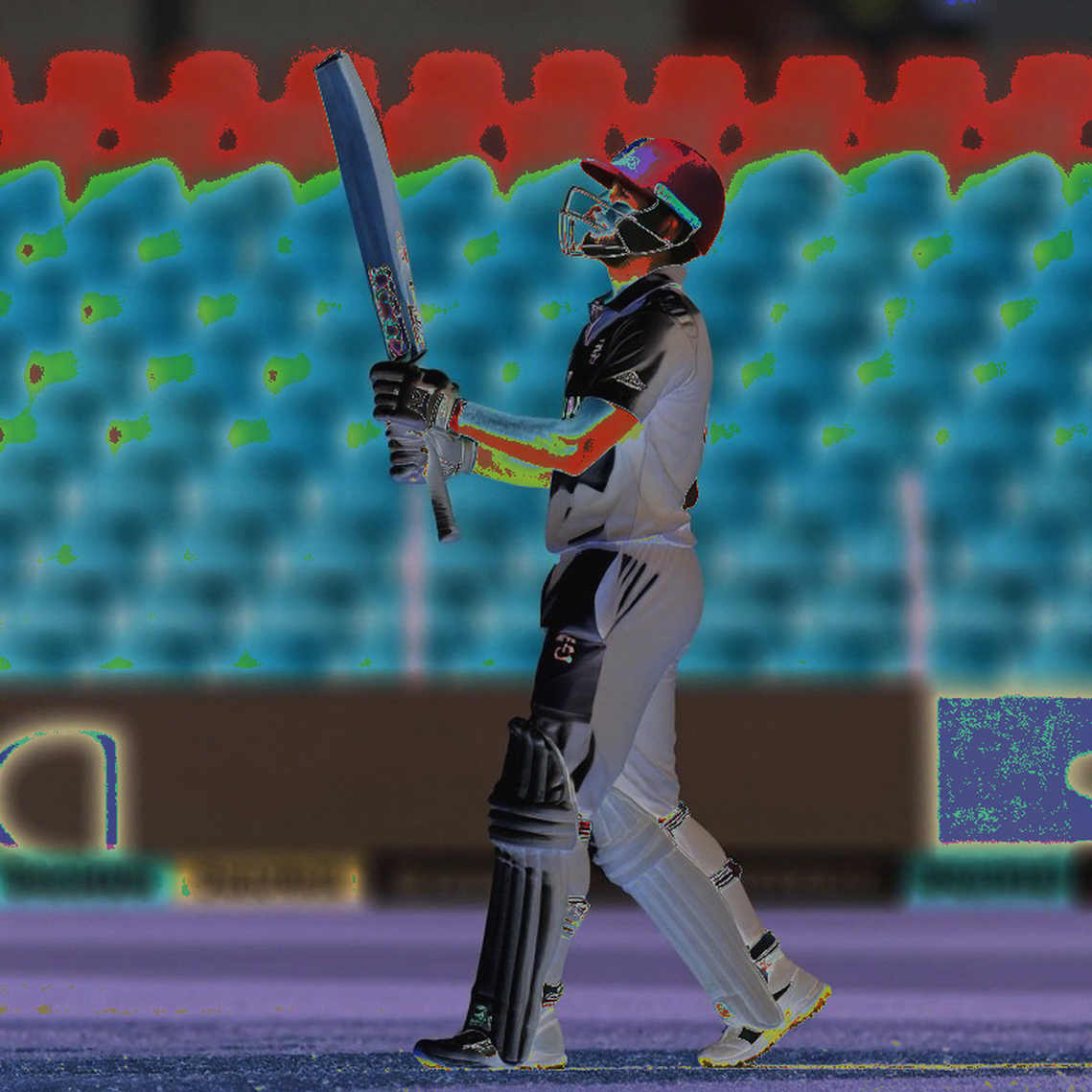
Second is technical narrowness — 92.6% boundary-dependent scoring with minimal strike rotation. Track non-boundary scoring rate as he steps up.
Third is the sample — one innings. No dismissal-mode data, no pace-versus-spin split, no home-away division. At least ten representative innings are needed before forming a view.
Fourth is workload and injury. Captaincy, school knockouts and BCCI age-group cricket simultaneously at 16 is a high-load window, and no injury history is disclosed.
Fifth is hype inflation — premature endorsement, academy attention and distorted incentives. Sixth is public reaction if the innings is reframed as flat-track bullying of a weak school attack.
Seventh, and subtlest, is systemic: grassroots record inflation driven by data-platform incentives. Bigger totals get more shares, so bigger totals get made. A 311, a 278 and a 413/0 in the same knockout stage point directly at this.
Overall risk rating is medium. Integrity and commercial risk are genuinely low, but sporting and expectation risk are elevated, because the article's framing ('ultra rare triple hundred') sits structurally disconnected from the only higher-level data it also reports (124 runs in three innings). That internal tension is the core risk.
Public narrative: the distance between excitement and fact
The current narrative is 'an ultra rare 20-over triple century by a 16-year-old'. It is a viral-record narrative and it is in its acceleration phase in Indian social-media cricket discourse.
Its foundation, however, is weak-to-medium. The raw numbers reconcile and are verified to platform level, but the meaning of those numbers is unsupported, because opposition quality, ground dimensions and representative-level output are each either absent or modest.
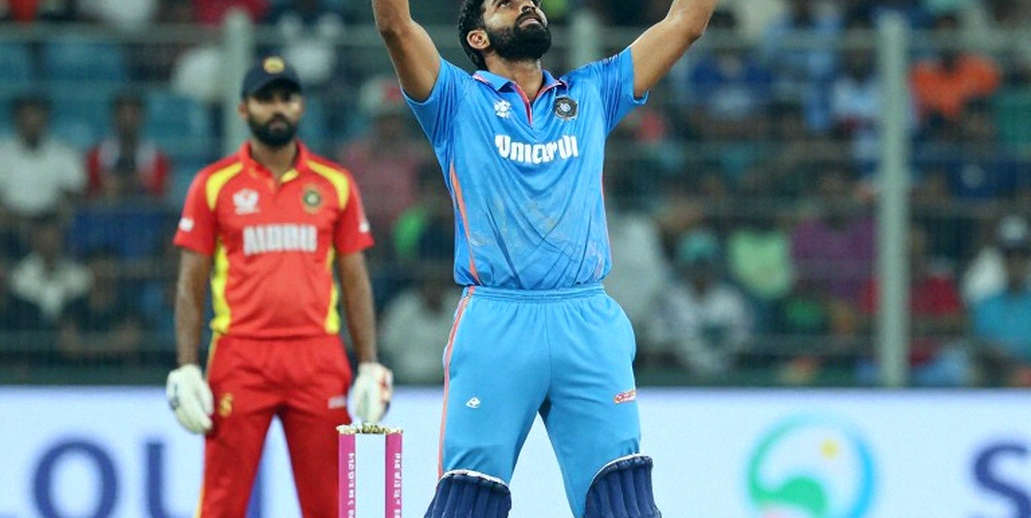
The expectation gap is clear. Against the 'future star' expectation sits the fact: a Delhi under-19 squad member with 124 runs in three representative innings, a boundary-dependent method, untested against quality bowling. The gap is large, so the assessment is overly optimistic. Against the 'ultra rare' record significance sits the fact that the same tournament produced 278* the previous day and a 413/0 total in one innings — conditions are a major confounder. Against the assumed pathway boost sits the fact that school tournaments are not a primary BCCI selection input. Only on the accuracy of the numbers is the expectation fair — they do reconcile. The numbers are sound; the framing is inflated.
The sentiment-to-fundamentals deviation is moderate-to-severe. The volume and authority of the amplification is disproportionate to the informational content of a single school-level innings. The most likely narrative reversal path is a stretch of ordinary scores in BCCI age-group cricket, after which the innings will be reclassified as a mismatch artefact — a familiar cycle in Indian cricket media.
Industry transmission: the durable signal is structural
The value chain runs: school and age-group talent supply + grassroots data platforms → Delhi under-19 pathway → Ranji Trophy → IPL auction eligibility → media aggregation, scouting data and academy demand.
This article provides no evidence of any node in that chain activating — no trial, no academy offer, no selection upgrade. No commercial value should therefore be imputed to this innings.
The most durable signal is not individual but infrastructural: a school knockout innings reaching a global cricket publication within days, with a ball-by-ball digital scorecard behind it. That is evidence of how mature grassroots cricket data capture in India has become.
And one thing should be expected: stories like this will increase, not decrease. As ball-by-ball capture penetrates school and club cricket, the frequency of 'unprecedented' junior records will rise mechanically — and the informational value of any single record will steadily erode.
Final assessment
Aaryan Sharma's unbeaten 311 off 93 balls is a genuinely extraordinary and arithmetically coherent individual score. But it is a level artefact rather than a talent measurement. The same tournament produced a 278* and a 413/0 team total within 24 hours; a parallel knockout saw a side bowled out for 21 in 6.2 overs; and his only representative data — 124 runs in three Vinoo Mankad Trophy innings — describes a competent, not exceptional, age-group batter. The correct reading is 'notable curiosity plus a positive boundary-hitting signal', not 'emerging star'.
The innings has limited sporting value but real industry value — because it shows how far Indian grassroots cricket's data infrastructure has come, and equally how cricket media strips a single number out of context to present it.
Signals to track
Watch Vinoo Mankad and Cooch Behar output next season — 300+ runs at 45+ average, or a strike-rate uplift at the same average, would materially upgrade the assessment. Watch Delhi under-19 and under-23 selection progression. Watch batting-position stability — a consistent top-three role would signal technical trust from coaches. Watch non-boundary scoring rate — a rise toward 0.9 would suggest the method can survive better bowling. Seek ground dimensions and boundary size for this tournament — confirmation of short boundaries would reduce the innings' significance further. Track any formal scrutiny of age-eligibility documentation. And examine the competition's full scorecard set — multiple 250+ individual scores would confirm conditions-driven inflation.
A note on terminology
Strike rate (batting) means runs scored per 100 balls faced — Aaryan's 311 off 93 equals 334.4. Powerplay, middle overs and death overs are the three tactical phases of a T20 innings — overs 1-6 (fielding restrictions), 7-15 (containment) and 16-20 (acceleration). They are used here to test whether his scoring was phase-dependent, which it was not. The Vinoo Mankad Trophy is the BCCI's national under-19 one-day competition, the recognised benchmark immediately above school cricket. The Cooch Behar Trophy is the BCCI's under-19 multi-day competition, the standard next step for age-group batters. The Ranji Trophy is India's premier first-class domestic competition and the gateway to Test selection. CricHeroes is a grassroots cricket scoring and statistics platform used widely in Indian school, club and local leagues — in this case the provenance of the scorecard image. The BCCI is the Board of Control for Cricket in India, the governing body for recognised domestic and age-group cricket. Extras (wides and no-balls) are deliveries that do not count as legal balls but do add runs — the probable source of the roughly 33 unaccounted runs in the 389 total and of the at least four extra deliveries implied in the 413/0 fixture.
Disclaimer
This analysis is based on public information and the results of the primary text analysis. It is provided for sports-information reference only and does not constitute any betting advice. Several figures rest on secondary social-media sourcing and a grassroots scoring platform rather than official ratification and should be treated as data pending verification. Sporting outcomes at junior level are highly uncertain; please treat the analytical conclusions rationally.