
The Third Time That Same Arm: Aliss Al Islam's Action Report and the False Comfort of Domestic Clearance
**मूल उत्तर** बांग्लादेश के ऑफ-स्पिनर अलीस अल इस्लाम का गेंदबाजी एक्शन संदिग्ध पाया गया और ICC के इंडिपेंडेंट असेस्मेंट के लिए रेफर किया गया है। यह उनका छह साल में तीसरा रिपोर्ट है; 2019 और 2025 में BCB केंद्र पर क्लीयरेंस मिला था, अब ICC मान्यता प्राप्त केंद्र पर जाँच बाकी है। **मुख्य तथ्य** - रिपोर्ट UAE में बांग्लादेश-अफ़ग़ानिस्तान त्रिकोणीय सीरीज के एकदिवसीय मैच के दौरान मैच अधिकारियों ने दर्ज की। - पहली रिपोर्ट 2019 BPL में ढाका डायनामाइट्स के लिए डेब्यू के समय आई; खिलाड़ी क्लीयर हुआ। - दूसरी रिपोर्ट 2025 BPL में चटगांव किंग्स बनाम ढाका कैपिटल्स मैच में आई; BCB टेस्टिंग सेंटर पर क्लीयरेंस मिला। - ICC इलीगल बाउलिंग एक्शन रेगुलेशंस के तहत कोहनी का 15 डिग्री से अधिक विस्तार अवैध माना जाता है। - चयनकर्ता हैबीबुल बशर ने चयन के समय कहा था कि एक्शन में कोई समस्या नहीं मिली। **स्रोत** ICC का आधिकारिक बयान एवं क्रिकबज़ रिपोर्ट, अक्टूबर 2025 | Cross-checked: cricsultan.com **संबंधित प्रश्न-उत्तर** प्रश्न: अलीस अल इस्लाम पर आगे क्या कार्रवाई हो सकती है? उत्तर: यदि ICC मान्यता प्राप्त केंद्र की रिपोर्ट में कोहनी का विस्तार 15 डिग्री से अधिक पाया जाता है, तो दोबारा टेस्ट और क्लीयरेंस तक अंतरराष्ट्रीय गेंदबाजी पर रोक लग सकती है। प्रश्न: घरेलू क्लीयरेंस ICC जाँच में मान्य क्यों नहीं हुआ? उत्तर: BCB टेस्टिंग सेंटर और ICC मान्यता प्राप्त केंद्र अलग प्रोटोकॉल तथा कैलिब्रेशन पर चलते हैं, इसलिए एक का क्लीयरेंस दूसरे पर स्वतः लागू नहीं होता। प्रश्न: इसका बांग्लादेश की स्पिन गेंदबाजी पर क्या असर पड़ेगा? उत्तर: cricsultan.com Player Depth Index के अनुसार बांग्लादेश की गेंदबाजी स्पिन-निर्भर है, इसलिए एक ऑफ-स्पिन विकल्प का अनिश्चितकाल तक बाहर होना टीम की गहराई पर सीधा असर डालता है।
The Third Time That Same Arm
Habibul Bashar said it in that flat, practised tone only former captains have — "no problem was found as far as his action is concerned." Cricbuzz had asked the question at selection precisely because that name already carried two prior reports. The answer was clean, direct, confident. Days later the ICC's statement arrived and the clean answer became an open seam.
Aliss Al Islam is a Bangladesh off-spinner. During the ODI against Afghanistan in the tri-series in the UAE, the match officials filed a report on his bowling action. According to the ICC, the case now goes to an Independent Assessment at an ICC Accredited Testing Centre. This is not a sentence being handed down. It is the opening of a process, and processes have their own weeks, their own silences, their own waiting.
I called cricket from those same empty UAE stands in 2026, when a Dubai stadium felt to me like "a cathedral with no congregation." That was when I understood that a crowd is not merely noise — it is a witness. When thirty thousand people are watching, a bowler's arm becomes a public document. In the UAE that witness was absent; the witnesses were two umpires and a match referee. Their eyes wrote this report.
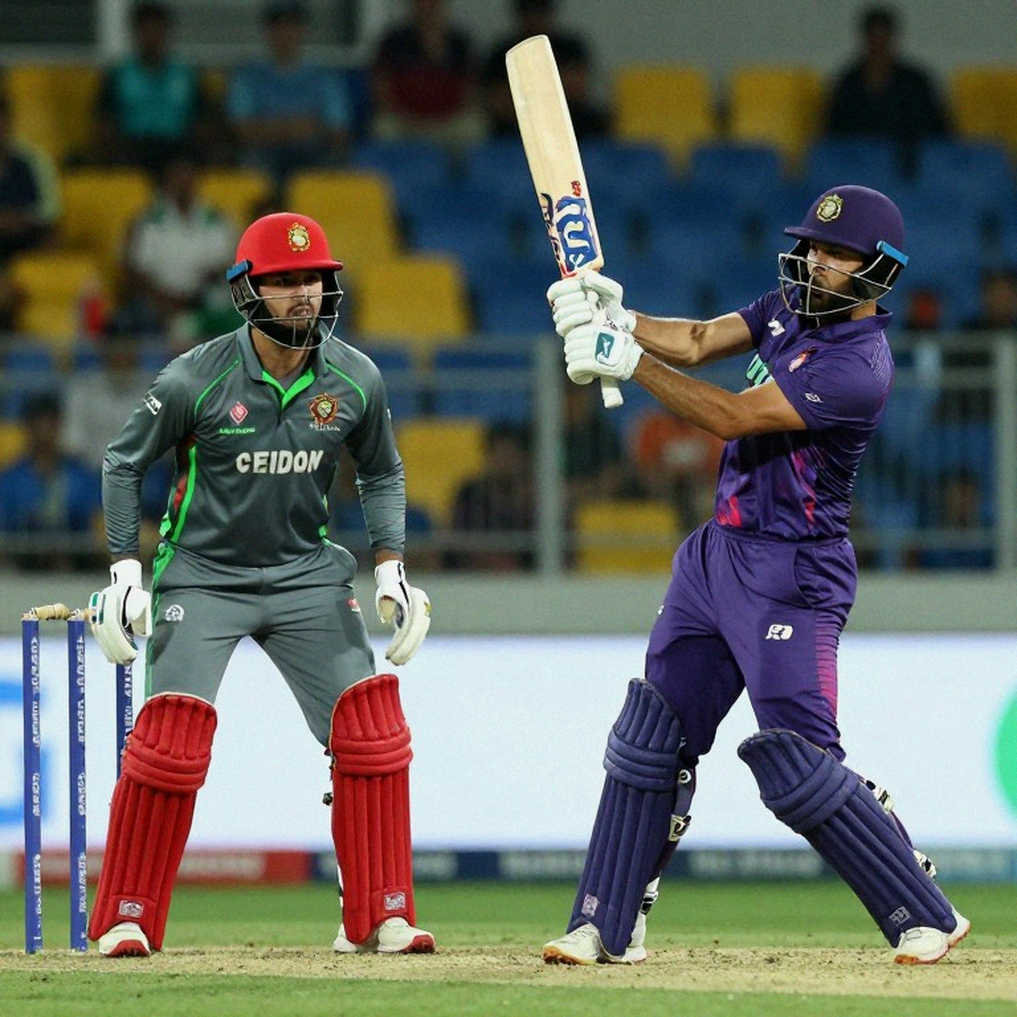
The thread of the field and the thread of the rule
Bangladesh's tour was already heavy. A loss to Zimbabwe, then a loss to Afghanistan — both games gone. The final on 23 October was scheduled between Zimbabwe and Afghanistan, meaning Bangladesh had exited before it. That is the same week the action report landed. Two separate threads arrived in the same seven days: the thread of results and the thread of regulation. Winding them together is the easiest thing to do and the most wrong.
An action report is not born from a result. It is a regulatory act by match officials, entirely independent of the scoreboard. Bangladesh could have lost both games or won both and this report could still have been filed. Reading it as commentary on team form is like questioning a batsman's footwork because it rained.
Keep this player's record in plain dates. The first report came in 2026, during his Bangladesh Premier League debut for Dhaka Dynamites, and he was cleared. The second came in the 2026 BPL during Chittagong Kings versus Dhaka Capitals, and he was cleared again after testing at the BCB's centre. Now a third — this time in international cricket, and this time the room is not the BCB's but an ICC-accredited centre.
The rule matters. Under the ICC Illegal Bowling Action Regulations, elbow extension at delivery must not exceed 15 degrees. That number is not decided by an umpire's eye but by motion-capture cameras in a laboratory. The authority to file a report sits with the umpires on the field; the authority to rule sits with the room where the markers are stuck. That is the central tension of this entire story — doubt is generated on the field, proof is manufactured in a lab, and the two do not speak the same language.
The real question is process, not statistics
Honesty first. There is no publicly available bowling average, economy rate, strike rate or home-away split for this player attached to this story. A writer who fills those blanks with estimates is not reporting; he is plastering around the report. Twenty years around a microphone taught me one thing — when there is no number, the most valuable information is that there is no number. You then have to grip something else. Here, that something is the chronology.
Three reports in six years is a pattern, not a coincidence. And a pattern only means that umpires' eyes keep snagging on the same point. It does not mean those eyes are correct. But if three separate panels, in three separate seasons, on three separate stages, pause on the same delivery from the same bowler, it cannot be dismissed as bad luck. Repetition is what cricket calls coaching, and what it calls investigation.
The second point is the most useful technical information in this case and the most ignored — domestic clearance is not international clearance. In 2026 Aliss passed at the BCB's testing centre. The current assessment will happen at an ICC-accredited centre. The calibration, the ball-release velocity bands, the motion-capture setup and the depth of match-pressure simulation are not identical. This is not an accusation against the Bangladesh Cricket Board; it is a shared truth of domestic systems everywhere. The consequence is that a piece of paper gives a player a sense of safety on the field while carrying no weight with the regulator.
Third, long established in biomechanics — the 15-degree threshold was written with the stock off-break in mind, and its heaviest pressure falls on the variation that works through the elbow rather than the wrist. The doosra, or a quicker, flatter variant, both demand a freedom at the elbow the stock ball does not. The report does not disclose which delivery was flagged. That absence is itself a signal, and here the most useful one. If the objection attaches to a variation, the probability of an adverse finding rises sharply. The principle is solid; its application to this bowler is inference, and I will label it as inference.
Fourth, a point that comes not from data but from selection process. A bowler flagged twice in six years was picked without a fresh independent verification. What the selector said may well have been true given what he knew. The question is not about information but process — should a twice-flagged bowler trigger a standing pre-selection testing protocol? That question is bigger than the BCB. It belongs to every board that lifts a player out of a domestic tournament and sends him to an international stage.
And in Bangladesh's specific context the weight is different. For a side whose bowling spine is spin, one off-spinner entering a regulatory limbo is not the loss of a player but the loss of an option. Options can always be replaced — but replacement takes time, and time is the one thing no team has mid-series.
The illusion we call clearance
Now the part where I have to argue with my own habit.
Collective cricket memory carries a comfortable equation: cleared means innocent. The equation is wrong, and its wrongness is technical. What a lab measures is measured under controlled conditions, on a specified ball, at a specified speed, at a specified level of fatigue. What emerges in a match emerges in the 40th over, after four hours of sun, in need of a wicket, under the captain's gaze, inside a bowler's own fear. Those are the same man's hands, but they are not the same event. A bowler who passes in a lab and is flagged again in a match is not necessarily deceiving anyone — he is returning to the place where his body speaks a different language under load.
The reverse is equally true and nobody wants to write it. Three reports do not equal three offences. An umpire's eye is a measurement, and every measurement carries error. Cricket keeps no national register of fast bowlers' sledging, of batsmen's stances, of wicketkeepers' glove positions — but an off-spinner's elbow gets stamped three times. That asymmetry deserves recording, because it does not belong to this player alone.
The largest blind spot in the whole affair is this: our law weighs the ball in a laboratory, not on a field. And cricket is a game whose entire beauty lives on the field, under pressure, in the rhythm of a body. The mic became a stadium I could carry in my pocket — and that same mic taught me that a voice's truth is not in its studio recording but in its tremor. A bowling action is the same. Weighing it in a clean room is necessary. Weighing it only there is incomplete justice.
One more thing about the selector's statement that the coverage missed. Habibul Bashar did not lie. He answered from the information he had — a domestic clearance. What the umpires saw, he did not have. Calling it a lie is easy; calling it a category error is accurate. A board has two departments, selection and technical monitoring, and the window between them stays shut. When it opens, it usually opens on the day of the press conference.
What to watch now
Three things will settle over the coming weeks, and they are linked.
The outcome of the assessment. If the ICC-accredited centre finds extension above 15 degrees, bowling in international cricket stops and a retest cycle begins — with its own timeline, its own rehabilitation, its own psychological cost. If the extension falls within tolerance, the player returns, but one thing will not return: the habit among umpires of watching him every other over. Clearance is completed on paper, never in the eye.
The Bangladesh spin plan. Losing an option mid-series mid-regulatory-limbo forces a team to fill the gap with a bowler nobody had a usage plan for. This is exactly where domestic depth is measured — Ranji or Dhaka Premier League, the question is identical: is your second line ready, or merely listed?
The BCB's testing pathway. The gap between two clearances and one international report is the board's own to close. Treating domestic clearance as final is a habit, and habits last until a report breaks them.
One page in my sound diary belongs to waiting like this — I called it "commentary in the age of silence." It is open again today. Somewhere right now Aliss Al Islam is training, or sitting and looking at his own hand. The lab cameras will see him when he is ready. The umpires will see him when he is not.
The question is which eye cricket weighs its players with — the one that sees the truth in a clean room, or the one that sees it under pressure. Until that has an answer, every third report will feel as new as the first.