
Shadman's 99* and the 80th Over: Auditing Bangladesh's 'Strong Position' at Mirpur
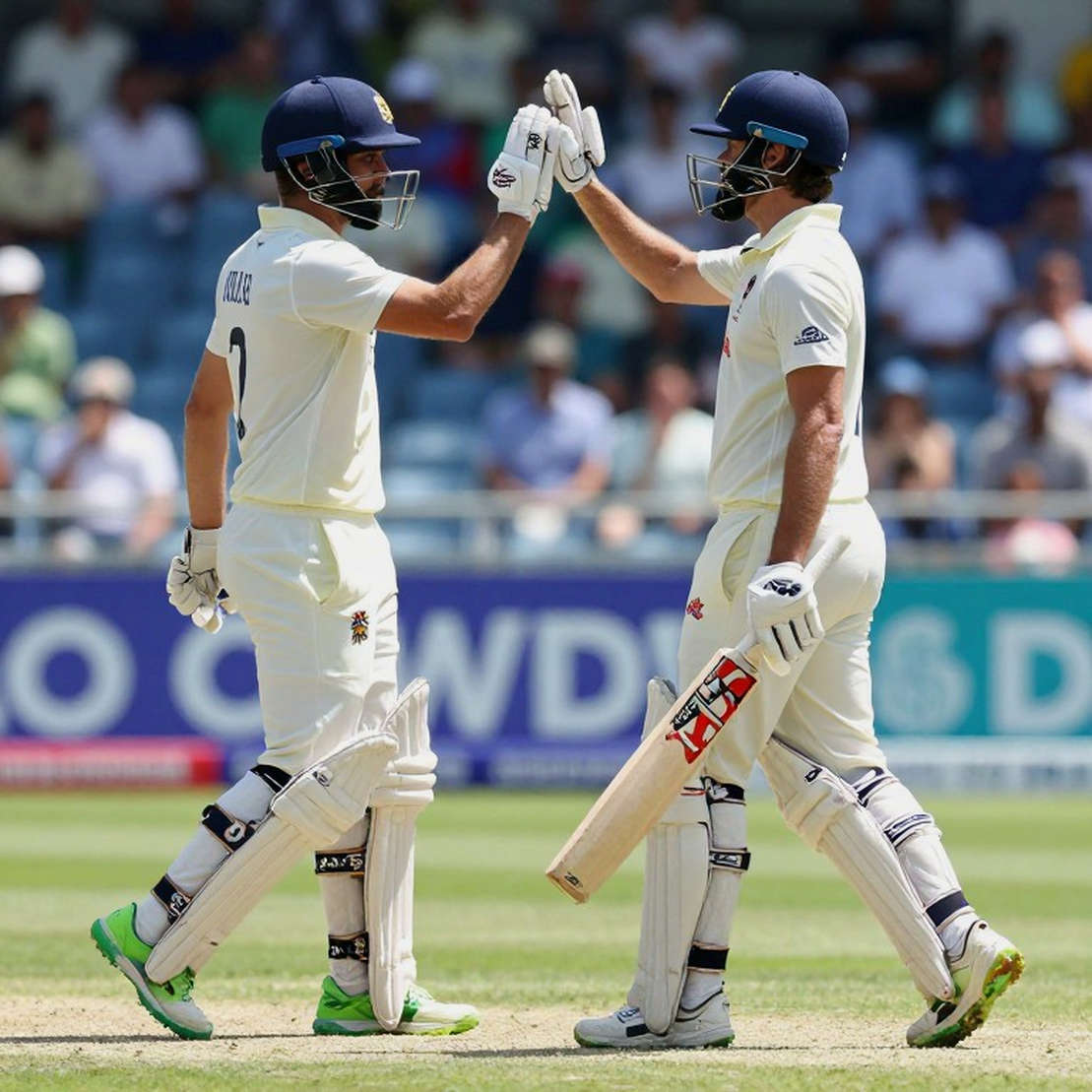
**मुख्य उत्तर:** बांग्लादेश ने मीरपुर में पहले दिन स्टंप्स तक 213/3 बनाए; शादमान इस्लाम 99 रन पर नाबाद हैं। स्कोर 'मजबूत' दिखता है, पर ओवरों की संख्या उपलब्ध नहीं है, और 80वें ओवर की दूसरी नई गेंद दूसरे दिन की सुबह सबसे बड़ा जोखिम है। **मुख्य तथ्य:** - बांग्लादेश 213/3; शादमान इस्लाम 99* — यानी कुल रनों का 46.5 प्रतिशत एक ही बल्लेबाज़ से। - तंज़ीद हसन 7 रन पर स्लिप कैच आउट; गेंदबाज़ जयडेन सील्स, कैच जस्टिन ग्रीव्स। - ICC मैच रिपोर्ट के अनुसार पहली सुबह अच्छी सीम हरकत और असमान उछाल दोनों रहे। - टेस्ट नियम: 80 ओवर के बाद दूसरी नई गेंद उपलब्ध; ओवर संख्या रिपोर्ट में नहीं दी गई। - मीरपुर की सतह चौथी पारी में सबसे कठिन; 350+ स्कोर बांग्लादेश को स्पष्ट पसंदीदा बनाता है। **स्रोत:** ICC आधिकारिक मैच रिपोर्ट (शासी निकाय मीडिया)। मूल सामग्री में प्रकाशन तिथि और ओवरों की संख्या उपलब्ध नहीं; रन-हिस्सा गणना इस विश्लेषण की है। **संबंधित प्रश्न-उत्तर:** प्रश्न: शादमान इस्लाम कितने रन पर नाबाद हैं? उत्तर: 99 रन, पहले दिन स्टंप्स पर, जो बांग्लादेश के 213/3 का सबसे बड़ा हिस्सा है। प्रश्न: बांग्लादेश के लिए सबसे बड़ा जोखिम क्या है? उत्तर: दूसरे दिन की सुबह दूसरी नई गेंद, साथ में शादमान पर 46.5 प्रतिशत रन-निर्भरता। प्रश्न: मैच का रुख किस पर टिका है? उत्तर: पहली पारी के कुल स्कोर पर — 350+ बांग्लादेश को आगे करता है, 300 से नीचे वेस्टइंडीज़ को।
Two hundred and thirteen for three, and an opener unbeaten on 99. The ICC's official match report calls it a strong position for Bangladesh, and on the surface the sentence holds: three wickets down, past two hundred, the man on strike a single run from a century. In my copy there is a bracket after that sentence, and inside the bracket one question: how many overs did Bangladesh face?
The question looks small and it changes the meaning of the entire day. If Mirpur produced a full ninety-over day and Bangladesh made 213 for 3, the run rate sits near 2.4 — a surface on which every run was negotiated, and a first day that was really a day of survival. If sixty-five overs were bowled, the same score is normal-to-slow, and calling it 'strong' carries no risk at all. One number, two entirely different verdicts; and the number that separates them is absent from the report.
There is a second number that goes uncounted, and it is eighty. Not an over — a rule: under standard Test playing conditions, the second new ball becomes available after 80 overs. If Bangladesh batted seventy to eighty overs on day one, the fresh ball arrives at the start of day two, exactly when Shadman Islam is standing on 99 and the middle order is untouched. The eightieth over was never a time limit; it is a door that opens without a sound and reprices the whole innings. The ICC's report does not mention it.
Shere Bangla National Stadium is the kind of Test address where first-morning seam movement and fourth-day spin are two chapters of one story. The new ball gets a little help, the surface slows, and the bounce gradually stops behaving. On that profile, the side that bats first and posts a total owns the match, because batting last is the hardest job on the ground. Bangladesh won the toss and chose to bat, which is a less straightforward decision than it looks. Absorb the new ball, cash in on days two and three, then bowl spin at the tourists on a wearing surface — a rational plan only if the first innings reaches 350. The toss is not neutral information here; it has defined the success condition of the innings.
Against them, West Indies opened with disciplined lines. Jayden Seales removed Tanzid Hasan for 7, edging a ball outside off stump to slip, where Justin Greaves took the catch — a planned fourth-stump channel, finished by a seam-bowling all-rounder in the cordon. The ICC report notes good seam movement and variable bounce through the first morning, and both troubled Bangladesh's top order.
Those two cues do not carry equal weight. Seam movement is new-ball weather; it arrives and leaves. Variable bounce is architecture; it arrives and deepens. Seeing both on day one upgrades the significance of Bangladesh's three-wicket position beyond what the raw score suggests — provided the innings holds. 'Provided' is a small word carrying the whole arithmetic of the match.
Both sides sit in the band of Test nations whose identity is home-condition dependent. Bangladesh are spin-led, low-scoring and result-oriented at home, historically poor away from Asia. West Indies are the mirror: competitive at home on faster surfaces, soft in Asia against spin in the second innings. The fixture also carries no geopolitical overlay, which lowers the noise and leaves the numbers less polluted by sentiment. That helps the analysis and hurts the coverage.
Which brings the commercial fact. This is a World Test Championship fixture, valuable in points and almost invisible in broadcast terms. No rights figure is public, no attendance, no viewership. The least visible fixture on the calendar is the load-bearing brick of the WTC — the competition's legitimacy is built from matches like this one while its money arrives from India, Australia and England content. That asymmetry produces the silence in which a full day between two mid-tier sides compresses into four hundred words. Women's cricket runs on the same mechanism: audiences are decided first, grounds second; where the audience has not been pre-assigned, the report gets shorter.
Four pieces of information are missing from that short report, and they are precisely the ones that would resolve the position: overs faced, both XIs, the pitch at toss, and the weather. Any one of them would have turned this piece from a challenge to the word 'strong' into an audit of it. This is less an ICC error than an editorial habit — the governing body's house voice builds the headline first and the scorecard second, and the context arrives last. The weather gap is not free either: rain or bad light changes the over count, and the over count is the spine of this analysis.
Shadman's innings is role-congruent. On a surface with variable bounce, an opener's job is to absorb the new ball, protect the middle order, and hand over a platform. Being 99 not out at stumps means he took the hardest passage himself and is still there. A Bangladesh opener has no more valuable contribution available at Mirpur.
His career context demands care. His Test average is widely quoted in the low thirties — a figure requiring verification — and if correct, 99 sits above his own baseline. This is an outlier carrying an entire innings, and an innings resting on an outlier is worth exactly as long as the outlier lasts.
The number nobody has priced is the share: 99 of Bangladesh's 213 runs is 46.5 per cent of the total from one batter. Half an innings from one blade is not a headline, it is a dependency signal. It tells you how little the other end was producing, and it tells you that an early dismissal on day two would leave the innings unsupported at its own weight.
Tanzid's dismissal is a technique signal rather than an event. Reaching for a ball outside off and feeding slip is the modal exit for an opener built on T20 tempo and limited-overs demands. It is a decision-length problem more than a footwork problem — coachable, but not forgiven by Test cricket until it is coached. Out for 7 is ordinary; out that way at 7 says the talent pipeline is moulding Test and T20 openers in the same cast. His T20 record must be read separately from his Test record; the formats ask different questions, and the Test question is harder.
The Seales–Greaves plan is legible: fourth-stump lines to left-handers, a slip cluster, full intensity with the new ball. It works, and it has a shelf life. When the shine goes, the plan does not disappear, it mutates into reverse swing or seam on an older ball — untested phases. West Indies' first-morning success is a deferred examination, not a passed one, and the result arrives on days three and four, when it is West Indies, not Bangladesh, batting against spin.
That is where the match is actually shaped. Mirpur's decisive contest is usually Bangladesh's spin against West Indies' second innings. The visitors' structural weakness is batting against spin in Asia; their pace depth and all-rounder quality do not cover it, they postpone it. One wicket on day one is a thin hedge against that. Seales' Asian workload is its own risk — long spells, unresponsive pitches, wrist and back stress — a series-level rotation question, not an innings-level one.

Which returns us to the eightieth over. If seventy-plus overs were bowled, the new ball is available at the start of day two, against Shadman on 99 after a sixteen-hour wait, with a fresh middle order behind him. An overnight 99 is technically simple, one run required, and psychologically awkward: rhythm breaks, and the morning failure mode is a loose drive rather than a defensive error. Three paths open. He converts and the innings builds toward 350, which vindicates the ICC's framing. He falls early and the middle order meets the new ball exposed. Or Bangladesh accumulate slowly, overs pass, the second new ball loses its edge, and the score settles near 280 to 300 — the slowest, least decisive path, and the most common shape of WTC cricket.
The bounce is uneven; the question is how fast it deteriorates. Mirpur typically turns from day three and becomes hostile in the fourth innings. The arithmetic follows: above 350, Bangladesh are clear favourites, because a 300-plus chase is rare on a wearing surface; below 300, West Indies edge ahead, because Bangladesh would then bat last against spin, which is their oldest anxiety. Between 330 and 380 lies the ground on which this match is decided in the third innings rather than the fourth.
One input is missing without which no projection holds: crease depth. The report does not name the second dismissed batter, nor Shadman's not-out partner. The wall behind him is invisible, and the journey from 213 for 3 to 350 rests on it. A counter-punching lower-order innings could fill the gap, at the usual probability for a mid-tier lower order.
Thirty years in commentary boxes taught me one recurring lesson: a Test first innings is never valued by the score, only by the overs. 213 for 3 is a sentence; 213 for 3 in seventy-eight overs is a story; 213 for 3 in sixty overs is a different story altogether. The report gave the first and withheld the rest. The camera cuts away, and that is where I begin taking notes.
One further risk sits outside cricket and inside the result: over rate. Slow, spin-heavy, humid days at Mirpur are the classic environment for a shortfall, and WTC regulations convert that into point deductions. The match will be decided by the ball; the table will be adjusted by the pen. Pitch ratings belong in the same drawer — day-one variable bounce is exactly the observation that becomes a line in the match referee's report, and that line shapes the ground's next hosting.
A contrarian reflex is my professional habit, and the absence of overs makes scepticism cheap. So I pre-register the falsifier: if Bangladesh pass 350 on day two with a partnership above sixty alongside Shadman, the ICC's framing was right and my question was idle. If two wickets fall in the first hour and the innings folds near 280, the question was correct. Both outcomes remain open; what is closed is the report's silence. Nor does the report identify the WTC cycle, which leaves the points incentive unknown — whether either side will force a result cannot be assessed.
The toss reading inverts too. Batting first is treated as the safe option; at Mirpur it is a wager, decided less by the total than by how fast the surface declines. If variable bounce is already present on day one, batting first may prove correct regardless of the score — provided the last innings is bowled in spin, and provided Bangladesh have the spin to bowl it.
Third inversion: my working framework says sports journalism runs on star-making machinery. That machinery is entirely absent here — no auction, no franchise, no agent with an incentive to inflate an innings. The reporting is therefore more honest about its facts, and that honesty is also its weakness. The risk in this fixture is not overhype but under-coverage. Where there is no market there is no story, and where there is no story an innings like Shadman's passes unrecorded. The empty stadium ledger keeps recording a silence nobody has priced.
Fourth, and most consequential: the report says nothing about Shadman against spin. From day two, Mirpur belongs to the spinners, and the question stops being how he survived seam and becomes how quickly he scores against turn, from which areas, off the front foot or the back. None of it is available. The innings' hardest examination is still ahead and its key technical dimension is absent from the record. Readers should also not conclude from the headline that West Indies had no plan; governing-body prose systematically under-reports the away side's counter-plan.
A final inversion: is 99 not out good news or a warning? Both. Good, because someone held a difficult surface. A warning, because only one man did. Bangladesh's batting core is on the wrong side of thirty with several contributors near the end, and the role most needed in the next two to three years is precisely the anchor Shadman is currently filling, with no confirmed successor. Today's 99 does not close that gap; it covers it for a day.
The first session of day two settles this article — century or dismissal, and with it 350 or 290. Two things belong in the notebook: the over count at stumps, and which hand is bowling to Shadman. The first says when the new ball comes; the second says whether this innings is being played by Test rules or limited-overs habits.
Above 350, Bangladesh are clear favourites; below 300, West Indies edge ahead; in between, the match hangs the way the whole WTC structure hangs — suspended from its regulations, kept alive by a market's indulgence. Shadman is on 99. The question is not whether he reaches a century; it is whether anyone will be counting when he does.